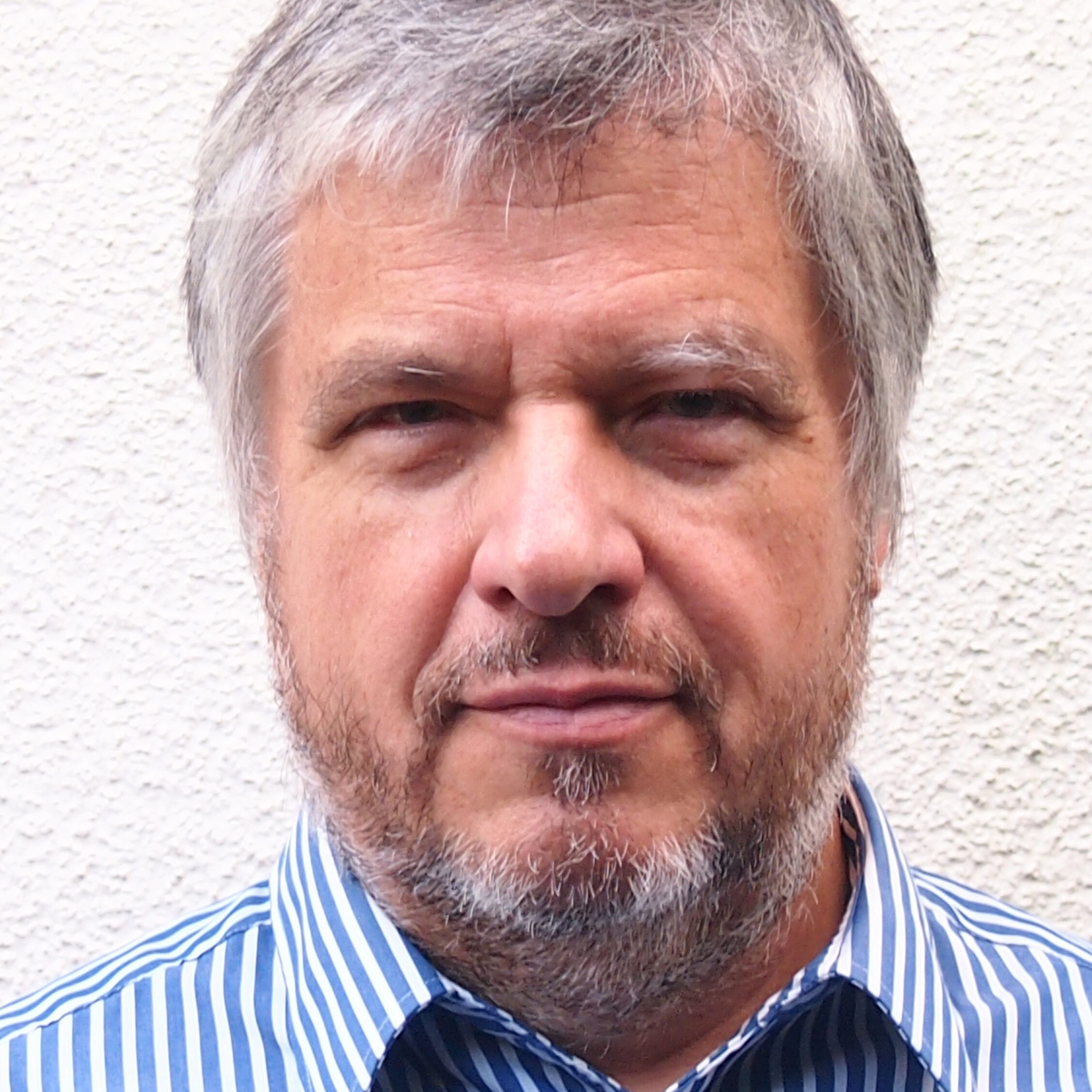



Evolutionary Hypotheses of Atheism by Dominic Johnson
As a starting topic for my new scilogs.com-blog about evolutionary studies of religion, I'd like to start with the exploration of - Atheism. Long regarded as the simple default state from which religiosity emerged, it is now increasingly explored on its own terms.
Dominic Johnson (University of Edinburgh) is one of the most creative scholars in the field of evolutionary studies of religion & group formation and a colleague of mine as an editor (politics) at Evolution - This View of Life. In a startling contribution to the respective issue of Religion, Brain and Behavior, Dominic presented a collection of ten (!) evolutionary hypotheses concerning the evolutionary histories and functions of atheism as a Target Article: "What are atheists for? Hypotheses on the functions of non-belief in the evolution of religion".
Hypothesis 1. There are no atheists
Here, Dominic explores the possibility "that, despite the existence of atheism as a concept and many self-identified atheists, everyone, in fact, believes in some form of supernatural agency, even if they deny it."
Hypothesis 2. Natural variation (null hypothesis)
The (yet) most established hypothesis claims that "although all human brains have mechanisms that make us susceptible to supernatural concepts, there is variation in individuals propensities to hold religious beliefs (due to variation in, and interactions among, genes, physiology, cognition, and environment)."
Hypothesis 3. Unnatural variation
Accounts of atheist movements in antique Greece and India notwithstanding, this hypothesis suggests that "modern philosophical and/or scientific education is the cause of atheism."
Hypothesis 4. Frequency dependence
According to this hypothesis, atheism could be adaptive "as long as it coexists with belief and neither becomes too common (beyond some threshold)."
Hypothesis 5. Exploitation
Here's an hypothesis in the wake of Karl Marx, who argued "that religion was a tool of the elite to control the masses". Atheism could be a way to avoid this controlling by others - or to gain and exploit respective positions.
Hypothesis 6. Ecological contingency
This hypothesis builds on the assumption that "atheism may be adaptive in some socio-ecological settings, while belief may be adaptive in other socio-ecological settings." Therefore, "ecological variation may maintain a mix of atheism and belief in the overall population."
Hypothesis 7. Catalysts
According to this perspective, "the presence of atheists may catalyze the functional advantages of religion in a similar way that the presence of "loners" (non-participants) can enhance the evolution of cooperation."
Hypothesis 8. Bolstering
In close proximity to the Catalyst-hypothesis, this one argues that "the presence of atheists may compel the community to constantly reinforce religious beliefs and behaviors in the face of criticism and scrutiny, boosting religious goals, ideals and commitment in the group as a whole."
Hypothesis 9. Restraint
In contrast to Hypothesis 7 and 8, the opposite could be true: "If a religion becomes too costly, incredible, destructive, or exploitative, then the protestations and arguments of atheists or skeptics may serve to tone down doctrine and prevent disaffection and disinitegration."
And, finally - Hypothesis 10. Atheism is a religion
"The key point is that (many) atheists are a collection of like-minded individuals who identify themselves by certain beliefs about the world, who differentiate themselves from people with different beliefs, and who stick together."
On closer scrutiny, all of those hypotheses are showing strenghts and weaknesses - and those are debated intensely by no less than eight responses from colleagues such as Catherine Caldwell-Harris, Armin Geertz, Ryan McKay and Daniel Dennett. The latter point out, for example (as did Dominic in a former article of his own), that the religious tend to have more children, making adaptive scenarios for atheism a little bit more tricky.
Personally, I can only appreciate that evolutionary studies on religion (= belief in superempirical agents) and spirituality (= experiences of unity and transcendence) are supported by a third pillar: Evolutionary studies of Atheism and Non-Belief. I'd be very glad if many colleagues would join the fray.
* See my review on the RBB-issue on Evolution - This View of Life.


Michael says " --- The latter point out, for example (as did Dominic in a former article of his own), that the religious tend to have more children, making adaptive scenarios for atheism a little bit more tricky."
I want to suggest the hypothesis that the tendency for the religious to have more children has nothing to do with Darwinian adaptivity and everything to do with cultural factors.
Several authors, including our own Michael Blume, have studied the demography of the religions and religiosity and shown conclusively – and correctly - that religious communities tend to be more fecund than less religious ones. Many have concluded that genuine belief is evolutionarily adaptive for Homo sapiens . But are they right? Let’s take a closer look.
It is often pointed out that the process of Natural Selection is reliant on three phenomena; phenotypic trait-variability, selection between trait-variants for fecundity and, thirdly, inheritability. A trait is said to be ‘adaptive’ if it tends to increase the fecundity of the individual possessing the trait. How do cultural/ behavioural differences between individuals come into the picture? According to the Modern Darwinian Synthesis, they don’t. ( However, I don’t agree. See
http://www.scilogs.eu/...-post-by-john-jacob-lyons)
Let’s take religiosity in Israel as an example. As usual, empirical studies reveal that the devout are much more fecund – i.e. they have many more children - than the secular. However, there are several cultural factors playing a part in driving this fecundity:-
- Scripture encourages believers to ‘Go forth and multiply’. Religious leaders therefore tend to preach fecundity to their flock.
- Parents teach their children to marry within the faith, have lots of children and to bring them up as devout Jews.
- Political leaders tend to encourage fecundity in the face of the perceived threat from neighbouring contries. There is the potential of political/ intellectual/ military strength in numbers.
- The devout are offered a number of concessions and considerable financial support by the Israeli constitution. They don’t have to participate in National Service and their family-oriented life-style is subsidized by the State.
It is clear that the fecundity of devout Israeli Jews is, at least partly, due to these cultural factors. I believe that this would also be the case for other religious groups.
But is this relevant to the Darwinian notion of phenotypic trait-variability? No. Phenotypic trait-variability is wholly the result of genetic/ epigenetic variants between individuals. The teaching of scripture/ parents/ rabbis and concessions granted by the state are not genetic/ epigenetic factors; they are purely cultural factors and can change at the whim of human leaders and the people they lead.
In order to claim that religiosity is adaptive, it is certainly necessary to show that the devout are more fecund. But this is not sufficient. You also need to provide evidence that religiosity has a direct genetic/ epigenetic correlate and to show that this innate religiosity plays a role in the observed increase in fecundity. It may well have such a correlate and I have argued elsewhere that it indeed has. But we need to prove it. It appears to me that you can’t argue that religiosity is adaptive without accepting my Genetic Priming theory or another theory that proposes that religiosity tends to be associated with particular genetic/ epigenetic variants.
My Genetic Priming Theory (I have written a formal paper that is now being peer-reviewed) supports the view that religiosity does indeed have genetic/ epigenetic correlates. However I don't believe that this innate religiosity plays any role at all in increasing fecundity. Without the cultural factors that I have outlined there would be no religiosity-generated increase in fecundity in my opinion. To my knowledge, there is no counter-evidence to this view at the present time.
Therefore I suggest that religiosity itself is not adaptive. It is the associated cultural practices/ conditions alone that have caused the difference we observe between the fecundity of religious and secular groups.
With regard to hypotheses about the existence of atheism ----------
I suggest that it is essential to distinguish between atheism and anti-theism in this regard. If the object of this evolutionary study is atheism, per se, then we are wasting our time. We may as well study whether or not non-belief in Santa Claus or the Tooth-Fairy is adaptive from an evolutionary point-of-view. Having said that, if there is an evolutionary basis to non-belief in the super-empirical it lies in the phylogeny/ adaptivity of human intelligence and reason.
What do you think of my ideas Michael?
By the way, I hope you are well and congratulations on this promising new blog!
Do you really think that atheism has long been "regarded as the simple default state from which religiosity emerged"? I've never before heard that idea.
In fact, I'd say it's just the opposite: religiosity is the default state. Everything we know about small-scale societies and animist worldviews certainly suggests this. There probably weren't any atheists in prehistoric societies.
Congratulations on the new blog!
Re: "There probably weren't any atheists in prehistoric societies"
What evidence do you have that supports this assertion? I have not heard that belief in gods predates the development of language and culture, which would have to be the case if homo sapiens evolved with gods already installed.
It is much more likely that religious systems were invented in human cultures to explain or manipulate a group of specific emotional states that can be triggered in our species. And given the long history of atheism and religious doubt among modern humans, it can't be assumed that every prehistoric group had supernatural beliefs, and in groups which did have such beliefs, it can't be assumed that every member believed whatever mythology was current and popular.
Hi Cris,
thanks for your thoughts. As Edgar pointed out: Every biocultural trait (such as speech, musicality, religiosity etc.) has to emerge in evolutionary history. So there had to be a time when the "first believers" entered the scene. And we are finding the respective variance in every human population.
John
I think there is a fundamental error in your base assumption: ‘I want to suggest the hypothesis that the tendency for the religious to have more children has nothing to do with Darwinian adaptivity and everything to do with cultural factors.’
Most anthropologists recognize culture as a necessary component of human evolution. Fire and cooking for example, are now suggested to have been necessary for our ‘large’ human brains to evolve (It releases more calories from food, so we get more nutrition with less time spent collecting food).
To wit: http://www.scientificamerican.com/article.cfm?id=cooking-up-bigger-brains
Culture, to include religion, atheism and perhaps anti-theism can (and I think should be) considered in Darwinian terms. Tool use and language are both learned attributes of culture which clearly affect an individuals as well as a communities competitive posture.
Dominic and Michael have both been looking into the adaptive impact of religion vs. atheism, so their data says nothing about anti-theism, Santa Clause or the tooth fairy.
Thanks for your response Alan.
Your first paragraph quote is not "my assumption"; it is, in fact, the conclusion of my argument. My only assumption, based on empirical evidence produced by Michael Blume and other researchers, is that religious groups tend to be fecund.
Of course, you are correct to say that culture is a necessary component of human evolution. I am not assuming nor concluding that it is not. This is a 'straw-man' Alan. For instance, I have been arguing for several years that our innate religiosity is the result of genetic priming that has its genesis in human behaviour. See, http://www.scilogs.eu/en/blog/biology-of-religion/2011-03-24/the-genetic-priming-of-religiosity-guest-post-by-john-jacob-lyons
I am simply pointing out that the observed fecundity of religious groups is necessary, but not sufficient, to prove Darwinian adaptivity. To prove adaptivity you also need to prove a genetic/ epigenetic correlate and to show that this genetically mediated effect has a role in the observed fecundity.
I would welcome a response from Michael because I believe that some of his work, along with that of several other eminent scientists, has assumed too easily that one only needs to show fecundity to conclude adaptivity. I am suggesting that fecundity is a good start but that more work needs to be done to conclude adaptivity.
Hi John,
I think Alan is right and pondered to answer in a separate blogpost with the very examples of cooking and speech - clearly cultural traits that nevertheless are accepted as "adaptive" and had a deep impact on our genes, anatomy etc. In contemporary evolutionary studies, the dualistic notion of nature vs. culture has been widely given up for an integrated and interdisciplinary, biocultural view:
http://www.scilogs.eu/en/blog/biology-of-religion/2009-10-30/biocultural-evolution-or-gene-culture-coevolution
What's more, there are empirical findings i.e. by Twin Studies emphasizing that religiosity is partially heritable as are other complex capacities of our brains, see here:
http://www.blume-religionswissenschaft.de/pdf/GeneticEnvironmentalInfluencesReligiousness2006.pdf
And, a newer meta-study here:
http://www.scilogs.eu/en/blog/biology-of-religion/2011-03-12/religiosity-genes-again-confirmed-by-another-twin-study
Best wishes, Michael
Thanks for that Michael. But this is a 'straw-man' argument my friend.
You must know by now that I am a firm advocate of the bio-cultural view of evolution. Everything I have ever written on the subject has advocated this view.
Let's take cooking for example. We can state with confidence that cooking has been adaptive because, firstly, we know that it has had an impact on the human genome. For example, the gut has been modified over time and more energy has been able to be devoted to cognitive functioning. Also, we know that these genetic changes have clearly been adaptive. So, we are able to show evidence of (1) genetic/ epigenetic correlates and (2) the adaptive impact of these correlates.
In the case of religiosity, I am simply pointing out that, again, it is necessary - but not sufficient - to point to fecundity. As with cooking, you firstly have to demonstrate that religiosity has genetic/ epigenetic correlates. As you know, not only do I accept that we have, I have also explained how this has happened (Genetic Priming). Without such an explanation, this contention would have appeared Lamarkian since, at first glance, it looks like the inheritance of acquired characteristics. However, to complete a proof of adaptivity, you also have to show that this genetically mediated religiosity plays a role in the observed fecundity of religious groups. This requirement is non-trivial since there are relevant, and confounding, cultural factors driving fecundity that don't (yet) have genetic correlates; eg, (in Israel) governmental policy and, probably, some of the other factors I mentioned in my original post.
It is always incorrect to assume that fecundity implies adaptivity. It is necessary but not sufficient Michael.
Best wishes from myself and the lovely Dianne,
John
Sorry, John, could you please stop spamming my blog?
As I have pointed out and linked repeatedly we are even having Twin Studies pointing out partial genetic heritability of religiosity. That's even more as we are having on cooking. Again, you just ignored what I wrote.
I know that you feel attached to your private "genetic priming"-theory and I have been among those willing to listen. But it's not a fair turn of yours now to use everything I am blogging as a means to promote your private hypothesis, spamming debates, ignoring empirical data and arguments.
Please, John, stop wasting our time and my patience. If you want to participate in evolutionary studies, please try to be constructive.
What a very disappointing, surprising, petulant and, perhaps, revealing reaction. I realize it is difficult for a professional academic to accept perceived criticism of their ideas but to react in such a blatantly ad hominem manner is completely unjustified.
To accuse me of spamming your blog after I have submitted a well-argued hypothesis is unforgivable and not worthy of you Michael. Methinks you protest too much.
If any evolutionary theorist makes the incorrect assumption that fecundity automatically implies Darwinian adaptivity, they must expect this assumption to be challenged. This is indeed constructive and eminently good science, not spamming!
John,
we've had this debate about a dozen times and, again, you are just ignoring whatever Alan, I or any others are answering. For example, none of us "makes the incorrect assumption that fecundity automatically implies Darwinian adaptivity", we discussed biocultural feedback, pointed out respective Twin Studies etc.
John, if you don't stop your repetitions, I'll just have to ignore or delete them together with the guest post I once invited you to at scilogs.eu. It was an invitation kindly given to a new person in the field, but it seems you misunderstood it as a way to hijack the comment sections of my English blog(s) for your private hypotheses. That's not fair behavior, John, and I wish you would ponder it for a moment.
That is a much more reasonable tone Michael and I welcome it. Let's get my position clear. I accept the evidence for (1) the increased fecundity of religious groups (2) the reality of bio-cultural feedback and (3) the evidence ( including twin-studies) for genetically-mediated contribution to religiosity. If I have ever assumed that an argument for any of these things is an argument for the adaptivity of religiosity, I would then have to apologize for this false assumption. This would have been a 'straw-man' of my own making.
I am simply pointing out that to prove the Darwinian adaptivity of any behaviour, one has to show (1) increase in fecundity (2) genetic/ epigenetic correlates of the behaviour and (3) an impact of these correlates on the proven fecundity. Period.
I appreciate your comments about Genetic Priming Michael. Point taken.
Michael -- I agree, as you put, that "every biocultural trait (such as religiosity) has to emerge in evolutionary history. So there had to be a time when the first believers entered the scene."
What we today call "religion" is obviously not just a matter of this or that belief -- it is a complex stew of cognition ideas, embodied experiences, and and cultural learning. The earliest hypothesized "religions" surely were animist-shamanist. In a sense, these are more than "religions" because they have epistemological and ontological functions. They enable people to "make sense" of the world and envision their place within the world. While this animist worldview entails belief or ideas, it also implicates larger issues of perception and experience. In an important sense, it is embodied and experienced beyond belief.
Having said all this, my point is this sort of animism is so deeply entwined with what it means to be human that there was probably never any point or time in our evolutionary past when we were not animist or incipiently "religious." Asking when we became religious or acquired religion would be akin to asking when we became "human."
In other words, what we today call "religion" is surely the result of evolution, but this does not mean there was some magical point at which non-animist humans became animist humans. This was a long evolutionary process that was deeply bound up with all aspects of cognitive and linguistic evolution. Animism surely emerged slowly in conjunction with all these other faculties or abilities, don't you think?
If this is the case, then there was no "point in time" at which our ancestors acquired "religion." In a sense, we have always been that way, or on our way to being that way. If there were any "atheists" in our prehistoric past, we probably need to go all the way back to our Australopithecine ancestors. By the time Homo appeared, brains had gotten larger, cognition had become more complex, proto-language was developing, basic rituals were surely in place, and there was probably some kind of proto-language. All of these things would have included, or been embedded in, a rudimentary animist worldview.
Hi Cris,
thanks, and I widely agree to your comment - until the point you seem to try to explain "religion" away. Although I completely agree that evolutionary processes are normally gradual, this doesn't mean that they are less interesting or less relevant. Yes, there surely was no point in time at which a child was "human" and the parents were not - but this doesn't change the fact that our ancestors evolved into humans and we're having "anthropology" as an important and interdisciplinary scientific field today.
In the same perspective, I agree (with Hume, Darwin and now you
) that "animist" beliefs perceiving superempirical agencies in natural phenomena with "shamans" probably formed the earliest religious traditions, but I'd expect ancestor worship to play an important role, too. We are descendants of thousands of generations of (increasingly) religious parents - and the evolutionary process hasn't stopped yet. It's a relevant part of our biocultural history and present. And it's meaningful fun to explore it scientifically.
Again, thanks for your sound and constructive comment!
Reflecting on the original comment from Cris and subsequent discussions, the issue of a comprehensive definition of religion and/or a workable functional definition for the purposes of assessing adaptation remains, I think, unresolved. Posited by Michael: ‘religion (= belief in superempirical agents) and spirituality (= experiences of unity and transcendence)’.
From this definition of Spirituality, one could observe a bear in a meadow gazing upon a sunset and conclude a spiritual experience. The same nominal problem exists for ‘belief’. Neither belief nor experience can be effectively ascertained nor measured, particularly in an individual unavailable for interview, as a human from the past or any bear, past or present.
Cris points at this with: ‘a complex stew of cognition ideas … more than “religions”’ and repeatedly placing religion in quotes. In anthropology, the line-in-the-sand is typically drawn at the Upper Paleolithic and the so-called ‘Fully Modern’ humans. This marked by the presence of physical evidence for ritual/symbolic representation as cave paintings or ceremonial burials. This is sometimes extended to jewelry or burials, especially if with grave goods. I would argue against this extension.
I suggest it would be more productive to mark religion by practice or by artifacts than by phenomenon that cannot be objectively or effectively measured.
Hi Alan,
yes, I agree - and tried for a time with a definition of religiosity as "behavior" towards superempirical agents. (We can observe behaviors, but not beliefs.) But then, colleagues from the brain sciences pointed out that they were just taking another perspective, i.e. in Nina Azari's great study on psalm reading. Here, the participants showed the same behaviors, but showed different levels of social cognitive involvement.
So, I opted for the position to accept the "classic" belief-related definition with the important add-on that we have to reflect our perspectives with every study. Some will aim at observing behaviors (for example rituals), some at outcomes (for example marriage and birth rates), some at narratives (for example theological talks and texts), some at symbols (for example artwork) and some at cognitions (for example brain studies). I wouldn't like to miss any one of these.