


Stephan Schleim: ABOUT THE AUTHOR

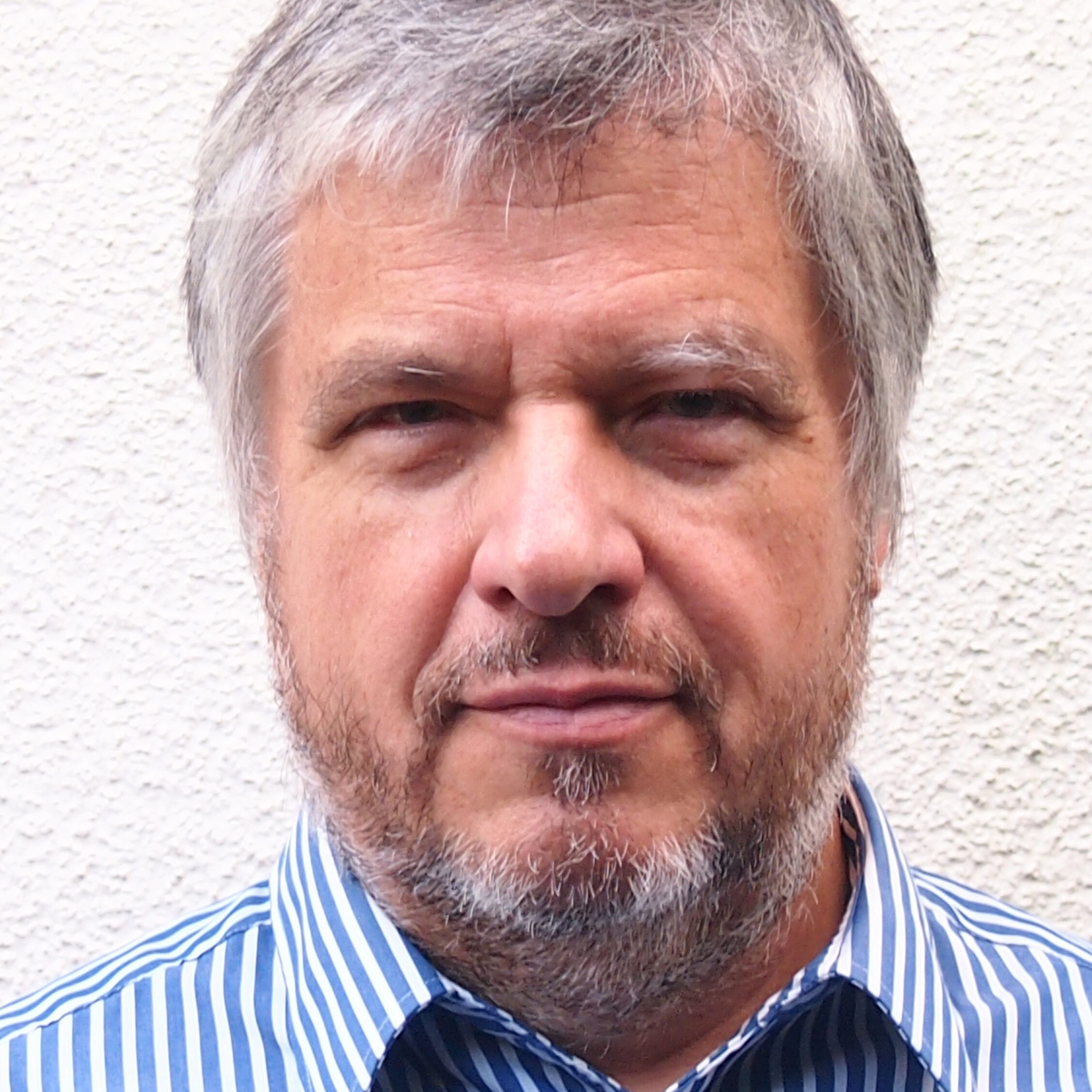
Stephan Schleim is Professor for Neurophilosophy at the Ludwig-Maximilians-University of Munich (Germany).
He studied philosophy, informatics, and psychology at the Universities of Mainz and Frankfurt (M.A. 2005). After an internship at the Max Planck Institute for Brain Research and a visit to the California Institute of Technology he went to the University Clinics Frankfurt and Bonn to investigate moral and legal judgments with functional magnetic resonance imaging. His theoretical and ethical interests led to a number of publications in the area of neurophilosophy and neuroethics.
He received a PhD in Cognitive Science for his doctoral dissertation "Norms and the Brain" from University of Osnabrück in 2009 that was awarded the Barbara Wengeler Prize for bridging neuroscience and philosophy in 2010. After a short period as postdoctoral researcher in Groningen, he was promoted to Assistant Professor in 2010. He is Professor for Neurophilosophy at the Ludwig-Maximilians-University of Munich since October 2012.
Stephan Schleim is also working as a science writer since 2005, published in different German media with translations into Italian, Dutch and Portuguese. His first book on neuroscience and mind reading was published in 2008, followed by an edited volume on neuroscience and the law in 2009, and another book on the neurosociety and its challenges for morality and the law in 2011.
Stephan Schleim: All Posts
The Chair for Neurophilosophy at the Ludwig-Maximilians-University Munich organizes an international and interdisciplinary meeting on neurophilosophy on March 21 & 22 2013. Colleagues interested in the neurosciences and their implications for other disciplines and society are invited to participate. ... Read more
It is already the fifth necessary restructuring of the governing cabinet of Germany within the current legislative period. Annette Schavan, minister for education and science, declared to step down from her function today in order to prevent further damage to her office and the government after the philosophical faculty of the University of Düsseldorf declared her doctoral degree to be invalid on Tuesday February 5. These cases lead to a general credibility crisis of German politics. ... Read more
Scientists will analyze the genome of the young man who recently killed almost thirty people in a mass shooting in the USA. Biology has been used frequently to understand criminality in the course of history, but with little success. It is unlikely that the genetic analysis will contribute to understanding the terrible crime. By contrast, it carries the risk of stigmatizing people with similar biological features and of overlooking psychological and sociological explanations. ... Read more
Many sciences use a broad model of causation that allows causal relations to exist on many levels, including social interaction; a reductionist view, by contrast, would even hamper scientific progress instead of supporting it; and agnosticism, after all, is a viable and rational position in a debate if neither side can present convincing arguments. ... Read more
The world is more than just an assembly of physical particles. Pragmatical arguments force us to give up the idea that, ultimately, everything must be accounted for by physics. This allows a pluralistic and complementary view for all scientific disciplines and helps us to avoid a philosophical stance that takes the world to be much more simple than we observe and experience it. Simplicity can be a virtue, but with regard to the sheer complexity of our world it can... Read more
Are humans nothing but a conglomerate of physical particles behaving in accordance with physical laws? Can we show that the existence of a soul and an afterlife are scientifically impossible? Is agnosticism a viable alternative? My proposal to overcome a deadlocked metaphysical debate. ... Read more
Some say that what used to be the domain of philosophy is now increasingly investigated by science. Will philosophers lose their job? Perhaps. Is philosophy dead? No. Psychophilosophy explains why common misconceptions about philosophy and science will not help us to solve the issue and how we might instead try to answer the Big Questions. ... Read more
Can scientific knowledge about the ideal diet help us increase our life-span? One of the options tested by members of the longevity movement is calorie restriction. A new study questions previous evidence for its health-effects in primates. Extreme fasting might not be a good idea for humans, after all. ... Read more
Is neuroscience able to overthrow our moral and legal system? Does the reference to brain causation morally or legally excuse one’s misdeeds? This psychophilosophical analysis explains why “My Brain Made Me Do It!” is no excuse. ... Read more
Establishing intellectual friendships, meeting interesting people, fighting fierce academic debates – when I was invited to join the German SciLogs team in 2007, I had no idea what to expect; nobody had. Now SciLogs has merged with Nature Blogs and suddenly I realize that five years of science blogging have passed. A new beginning: time for a reflection. ... Read more